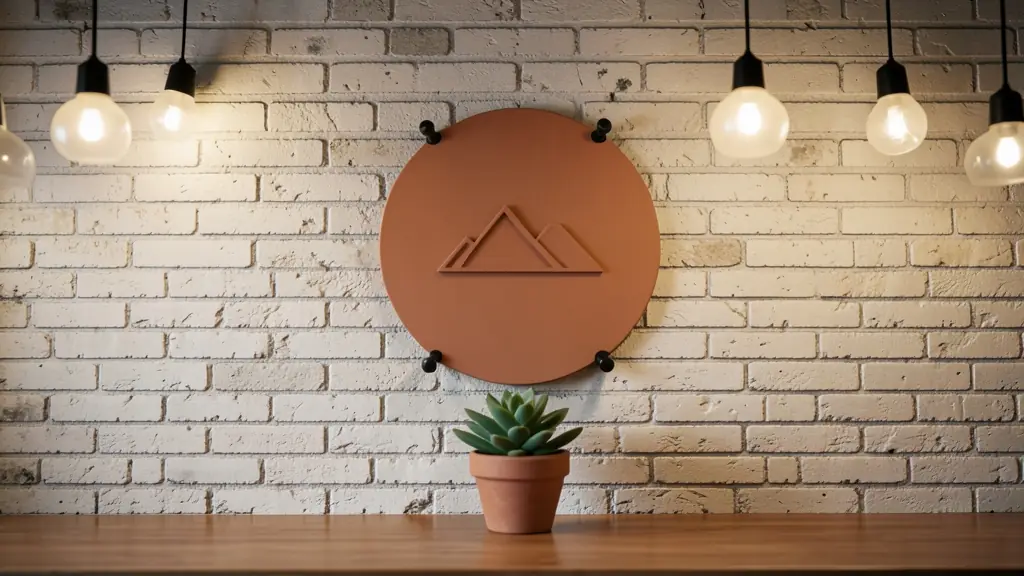
A Maboneng café wanted its name on the brick wall behind the counter, deep enough to throw a shadow, in a colour that matched the cups. Routing that from acrylic would have meant a flat face; printing gave rounded edges, a hollow back for the mounting pins and a texture that suits brick. Printed signs work best for small runs, odd shapes and logos with depth, from a 60 mm door sign to reception letters you split and join.
Printed, routed or laser cut?
Laser cut and routed letters come from flat sheet, so they are crisp, quick and cheap for plain lettering in acrylic, wood or aluminium. Printing wins when the letter needs depth that changes, a domed face, a bevel, a built in standoff, or two colours in one piece.
Many sign makers combine them: a laser cut backing plate with printed letters on top. If the letters run past about 300 mm, read large 3D prints on splitting and joining.
Inside, outside and in the sun
- Reception and office walls: PLA prints crisp edges and takes paint well.
- Shop windows facing north or west: glass bakes, so use PETG or ASA, not PLA.
- Outdoor signs and gate plaques: ASA, which holds its colour in UV, or a painted and sealed finish.
- Bathrooms and kitchens: PETG handles damp and cleaning.
The materials guide compares them.
Mounting that stays up
Ask the shop to design the fixing into the letter rather than glue it on later. Common choices are pins in blind holes for brick and plaster, a recess for VHB tape on glass and painted walls, and threaded inserts for standoffs that float the letters off the wall.
A paper template with the hole positions printed full size saves a crooked install, so ask for one with the letters.
The file that makes it easy
- Send the logo as a vector file (SVG, PDF or the designer's original), not a small JPEG from the website.
- Give the overall width or the letter height you want, and the depth.
- Name the colours, ideally as paint codes, or say "print white, we paint".
- Say how it is fixed and to what surface.
Using another company's logo or a franchise character? Ask the rights holder first.
What to put in your request
- The logo as a vector file, not a screenshot
- Overall width or letter height and depth
- Indoor, window or outdoor, and which way it faces
- Colours, or white to paint yourself
- The surface it mounts on and how
Signs and Logos: who orders it and why
- Makers and hobbyists: a house name for the gate, a child's name for the bedroom door, a club plaque
- Schools, colleges and makerspaces: house crests, office door signs and lettering for an open day display
- Engineers and product designers: equipment tags, panel labels in relief and safety markers for a plant room
- Small businesses and sellers: café and shop wall lettering, reception logos and window displays for openings
- Factories, mines and workshops: raised machine labels, warehouse aisle markers and bay numbers that last
- Dental labs and clinics: practice name plaques and tactile door signs for consulting rooms
- Car owners and panel shops: dealership showroom logos and workshop bay signs, with the brand's agreement
- Architects, artists and prop makers: exhibition titles, set lettering for theatre and photo shoot props