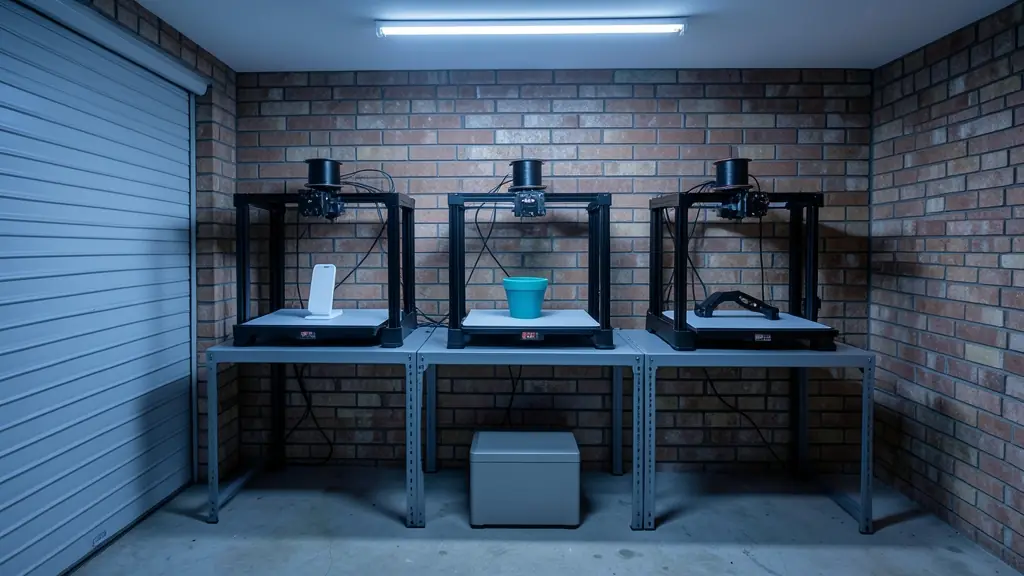
A printer in the spare room that pays for itself is a real thing, and so is a shelf of machines that ate a retrenchment package. The difference is usually not the printers. It is picking work people actually pay for, pricing the hours nobody sees, and keeping the room running through a power cut. This page is for the technician in Vereeniging or the designer in Gqeberha weighing up a small print business: what sells, what to buy first, and where the time goes. No income promises, just the arithmetic you need.
Work that tends to sell
- Repairs and spares: knobs, clips, caravan fittings, discontinued parts. Steady, local, word of mouth. See replacement parts.
- Models: student architecture models before a crit, estate agent site models.
- Gifts: lithophanes, name plaques, personalised items around December and Mother's Day.
- Signage: raised letters for cafés and offices.
- Short runs: keyrings, cases and holders for small brands. See batch production.
Pick one or two and get known for them; general "we print anything" listings compete on price alone.
The first two or three printers
Start with reliable FDM machines you can repair yourself, ideally the same model so spares and profiles are shared. Add an enclosed one for ASA and PETG work outdoors, and leave resin until you have a ventilated space and a steady detail customer.
Use the print farm capacity calculator to see what three machines produce in a real week, not a perfect one.
Pricing the time nobody sees
- Count the material in grams and the machine hours.
- Add your hands on time: quoting, fixing files, slicing, removing supports, packing, messaging.
- Add a share for failed prints. Every printer fails sometimes, and a new operator fails often.
- Add wear: nozzles, sheets, belts, a printer replaced every few years.
- Set a minimum order so a ten minute print still covers the admin.
If that number looks high next to a hobbyist's advert, it is usually the honest one.
The room, the power and the files
Printers hum for hours and need a steady temperature, so a quiet room with a door and decent airflow helps. A UPS or a battery and inverter keeps a long print from dying at hour nine of a load shedding cut.
Many downloaded models carry licences that forbid selling prints, and characters and team logos belong to their owners. Check each model's licence, buy commercial licences where offered, and ask the rights holder when in doubt.
What to put in your request
- The work you plan to sell first
- How many printers and what bed size
- Whether you need an enclosure for ASA or PETG
- Your budget for printers, spares and backup
- Whether you want setup and training
3D Printing Business: who orders it and why
- Makers and hobbyists: a hobby printer that starts taking paid repair and gift jobs from neighbours
- Schools, colleges and makerspaces: a learner or student selling models and prints alongside their studies
- Engineers and product designers: a designer offering prototypes and design plus print to small clients
- Small businesses and sellers: a small print studio with a niche such as signage, gifts or short runs
- Factories, mines and workshops: a technician printing jigs and spares for local factories and workshops
- Dental labs and clinics: a model printing service for labs, working only to the lab's approved specs
- Car owners and panel shops: a parts service for restorers who need clips and trims no longer made
- Architects, artists and prop makers: a maker selling licensed figures, props or lithophanes at markets and online