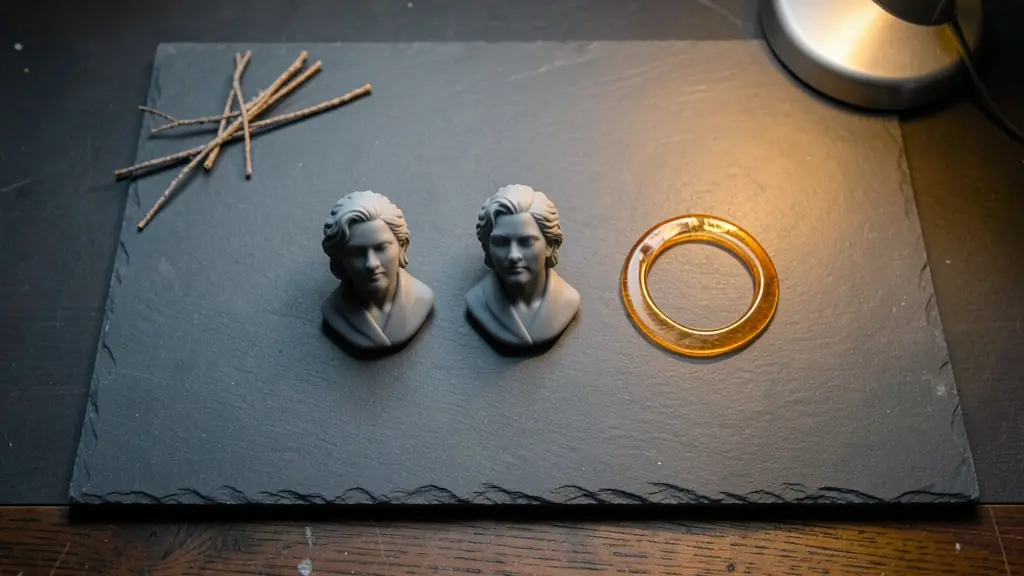
A grey resin bust from a good bureau has no visible layers at arm's length. That is why tabletop gamers, jewellers and dental labs send their work to resin printers. A screen or laser cures liquid resin with UV light, one very thin layer at a time, so detail down to fine hair and tiny text survives. The catch is size, brittleness and a few habits of the process that you should know before you order.
Who orders resin, and why
- Miniature painters after crisp 28 to 32 mm figures and busts. See miniatures and figurines.
- Jewellers sending a ring for castable resin and lost wax. See jewellery printing.
- Dental labs printing study and working models. See dental models.
- Product designers who need a small, precise part to photograph or fit.
The trade offs, plainly
Standard resin is brittle. A thin sword or a 1 mm clip can snap if dropped. Support nubs are left where the part hung from the plate; they are sanded, but a careful bureau puts them on hidden faces. Sun yellows it: clear and white resins in particular yellow over time in strong UV, so a windowsill is a poor home.
Size is limited. Many resin printers build only around 130 to 220 mm tall, so a bigger model is printed in parts and glued.
Hollow it and pay less
- Ask the shop to hollow solid models to a shell of about 2 to 3 mm.
- Agree where the drain holes go, usually under the base, so uncured resin can run out.
- Expect the shop to plug or leave the holes, as you choose.
- Compare the price: resin is charged by volume, so a hollow bust often costs much less than a solid one.
Washing and curing are done by the shop before handover.
If you need it to bend or take a knock
Tough or ABS like resins take impact far better than standard grey, and flexible resins suit gaskets and soft pads. Castable resin burns out cleanly for casting. Say what the part must survive, a drop onto tiles, a clip that opens daily, a hot shelf, and the bureau picks the resin to match. Specialist resins cost more per millilitre than standard grey, so only ask for one when the job needs it. For truly tough working parts, compare FDM or SLS nylon.
What to put in your request
- Say the scale or height and attach the file
- Note whether the file is pre supported
- Ask for hollowing and agree drain hole places
- Say if it must take knocks or bend
- Mark faces where support marks are not allowed
Resin 3D Printing: who orders it and why
- Makers and hobbyists: tabletop figures, busts and collectables printed sharp enough to paint closely
- Schools, colleges and makerspaces: small detailed models for design and art projects, printed by a bureau
- Engineers and product designers: small precise prototypes and fit parts photographed for a client
- Small businesses and sellers: product samples and small display pieces with a smooth skin
- Factories, mines and workshops: small housings, nozzles and test pieces in tough resin
- Dental labs and clinics: study and working models printed from the lab's scans, its own call on use
- Car owners and panel shops: badges, small trim details and scale car model parts
- Architects, artists and prop makers: jewellery patterns for casting and fine sculpture for galleries