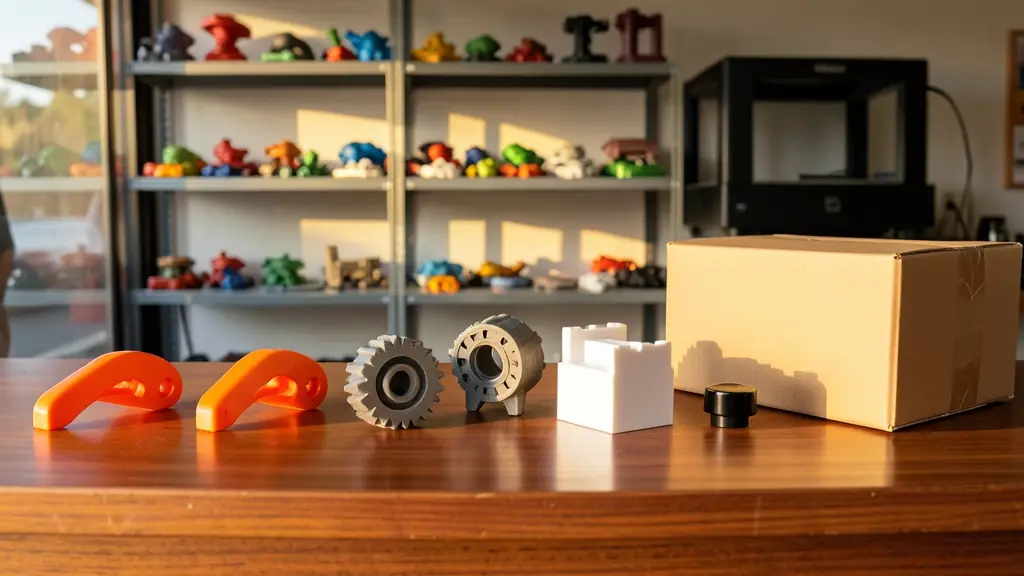
Walk into a print shop in Braamfontein, Umhlanga or Bellville and you will see the same thing: people holding a snapped plastic clip, a laptop with a file on it, or a sketch on the back of an invoice. The job behind the counter is to turn any of those into a part. That means checking what you brought, choosing the right machine and material, giving you a price and a date, then printing, cleaning and handing over or couriering the result.
Six steps between you and the finished part
- Intake. The shop looks at your file, drawing or broken piece and asks what the part must do.
- File check. A mesh is opened in the slicer and repaired or sent back. Own file? Read printing from an STL file first.
- Process. Filament for tough or big parts (FDM), resin for fine detail, powder nylon for strong batches.
- Quote. Grams, machine hours, set up and finishing, with a lead time.
- Print and finish. Supports come off, and sanding or paint only if you ordered it.
- Handover. You collect, or it goes by courier in a padded box.
Walk-in shop, online bureau or a friend with a printer
A walk-in shop suits repairs and anything you want to hold up against the original before paying. You can talk through the problem, and many will measure your broken part on the spot. An online bureau suits clean files, nylon and resin work and repeat orders: you upload, it quotes, it couriers, often from another province.
A hobbyist with one machine at home can be quick and cheap for a keyring or a figure. For a deadline, a large print or twenty identical parts, a shop with several machines and a backup is the safer bet.
Bring these, save a phone call
- The file (STL, 3MF or STEP) or the broken part itself, in a bag with all the pieces.
- The size that matters, measured with a ruler or vernier.
- What it must survive: sun on a stoep, a hot car, oil, a drop on tiles.
- How many you need, now and later.
- The date you need it by, and whether you collect or want it couriered.
Not sure what you are asking for?
That is normal. A matric learner with a project, a gran after a photo lamp and a cosplayer after a helmet all start the same way: describe the object and its use, and let the shop suggest the process. The technology picker gives you a first guess before you ask.
What to put in your request
- Attach the file, or photos of the broken part with a ruler
- Say what the part does and where it lives
- Give the one or two sizes that must be right
- How many you need now and whether repeats follow
- The date and whether you collect or need a courier
3D Printing Shop: who orders it and why
- Makers and hobbyists: a broken knob, a figure, a gift or a part for a home project printed in town
- Schools, colleges and makerspaces: learners' design projects and matric models printed when the school machine is busy
- Engineers and product designers: prototypes and fit checks turned round quickly before anything is machined or moulded
- Small businesses and sellers: shop displays, branded items and short runs without buying a printer
- Factories, mines and workshops: spare covers, guides and holders printed while the imported part is on back order
- Dental labs and clinics: study models and workshop aids printed to the lab's own file and approval
- Car owners and panel shops: trim clips, vent fins and brackets for older cars where the dealer has none
- Architects, artists and prop makers: scale models, sculpture parts and theatre props printed to a deadline