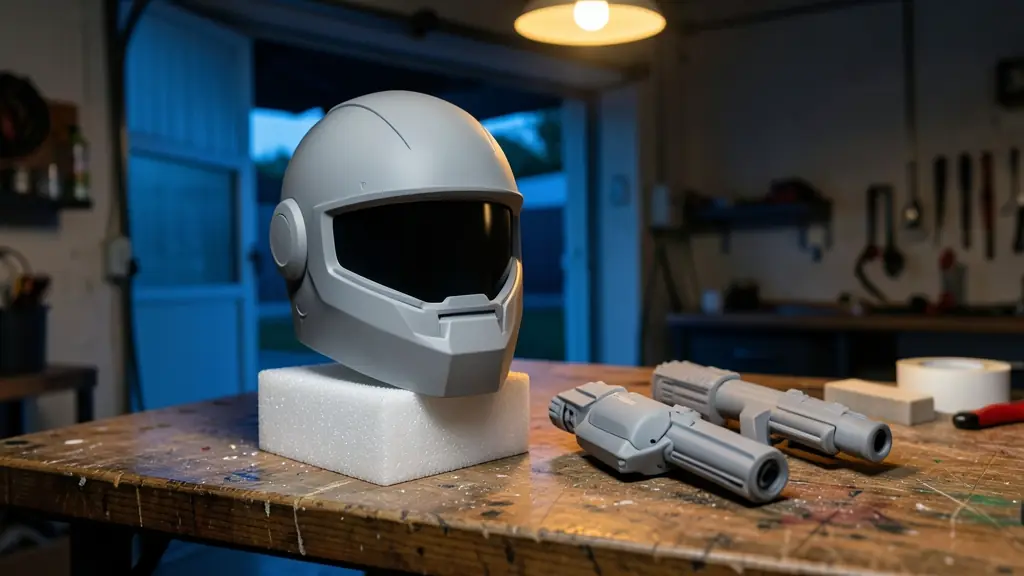
Six weeks before the big convention at the expo centre, print shops in Gauteng start getting the same message: a helmet file, a photo of a character and the line "can you have it by the 20th?" Sometimes they can. A wearable print is not a display piece. It has to fit a real head, survive a day of crowds and photos, weigh little enough to wear for eight hours and still leave time for sanding and paint.
Measure the wearer before anything prints
Helmet files are scaled to whoever made them. Measure around your head above the eyebrows, from chin to crown, and ear to ear over the top. For armour, measure the forearm, the shin and the chest at the widest points.
Send those with the file. A good shop scales the model to you and prints a cheap test ring or a quick low detail version so you can try it on before the real print uses a kilogram of filament.
Which plastic for which piece
- PLA for helmets, masks and hard armour: stiff, sharp and easy to sand. Do not leave it in a parked car in January.
- PETG for pieces that flex or get knocked, and for outdoor events in the sun.
- TPU for straps, hinges, ear pieces and anything that bends against the body.
Big helmets and chest plates print in parts and get joined; see large 3D prints.
Weight: what a day in the costume feels like
A solid helmet in thick walls can weigh as much as a bag of sugar. Ask for thin walls with low infill, a shell of around 2 to 3 mm is often enough, and padding inside. Every gram on a forearm or a shoulder is felt by mid afternoon.
Tell the shop how long you will wear it and whether you will be on your feet in a hot hall, and ask for an estimated weight for each piece before it prints.
Countdown to the convention
- Six weeks out: file, measurements and quote.
- Five weeks: test fit, then the full print.
- Three weeks: sanding and filler primer, which takes longer than anyone expects. See post processing.
- Two weeks: paint, weathering, straps and padding.
- Last week: wear it for an evening at home and fix what pinches.
What to put in your request
- The file, or reference pictures from several angles
- Head or limb measurements in mm
- Raw print, primed or fully painted
- Which parts must bend or flex
- The convention or event date
Cosplay Props: who orders it and why
- Makers and hobbyists: a helmet, mask or armour set for a convention, sized to fit and light enough to wear all day
- Schools, colleges and makerspaces: costume pieces for a school play or drama exam, printed and painted on a tight term budget
- Engineers and product designers: printed shells used to test the fit of a wearable product on real heads and arms
- Small businesses and sellers: mascot heads and character props for a launch or a brand event at a mall
- Factories, mines and workshops: lightweight replica safety gear for training videos and display stands
- Dental labs and clinics: fitted, lightweight costume pieces for wheelchair users and children at hospital events
- Car owners and panel shops: costume props for a car show stand or a motorsport themed event
- Architects, artists and prop makers: film, theatre and music video props that must look heavy on camera and weigh little