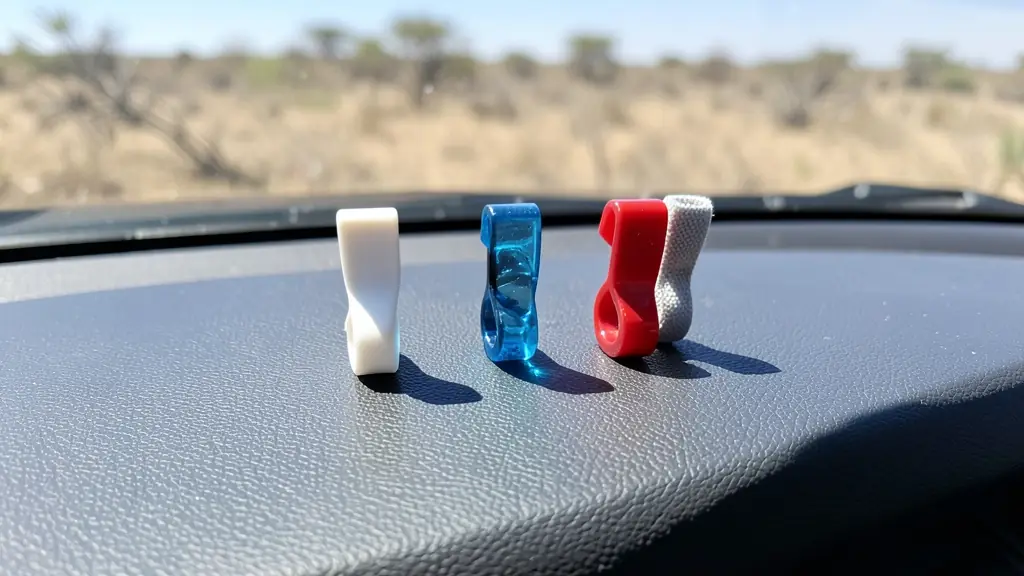
Customers often walk in asking for "the strongest plastic", when the real question is what the part has to live through. A bracket for a lounge shelf and the same bracket on a bakkie's roof rack in Upington want different materials, and a wrong guess shows up within a week. Start from the conditions: heat, sun, impact, bending, water, chemicals. Then let the shop match a material, a colour and a finish to them. This guide explains the plastics a print shop will usually offer you.
The usual menu, one line each
- PLA: easy, stiff, crisp detail, cheapest; softens around 55 to 60 °C.
- PETG: tougher and more heat and sun tolerant than PLA; a good default for functional parts.
- ASA: built for outdoors, holds up to UV and heat; needs an enclosed printer.
- TPU: rubbery, for straps, bumpers, seals and grips.
- Nylon and carbon fibre nylon: tough, wear resistant engineering parts.
- Standard resin: fine detail for figures and models, but brittle.
- Tough resin: less brittle, for small functional resin parts.
- SLS nylon (PA12): strong grey or dyed parts with no supports. See SLS nylon printing.
What it must survive, and what fits
- A car parked in the sun: not PLA. PETG at the least, ASA or nylon for a dashboard.
- Years outside on a wall or a gate: ASA, with a light colour to stay cooler.
- Being dropped or knocked: PETG, nylon or tough resin; standard resin may crack.
- Bending and flexing: TPU, or nylon for a living hinge.
- Water and a garden hose: PETG or ASA; printed parts are not fully watertight without sealing.
- Oil, fuel and cleaners: nylon often does best, but test a sample first.
Not sure? The technology picker starts from the same questions.
Colours and finishes
FDM colours come from the filament, so a shop can offer what it stocks: matte, satin, silk, glossy, translucent, and blends with wood or stone fill. Ask to see a printed sample, because a colour on a spool looks different on a part. Resin is usually grey, white, black or clear, and is often primed and painted.
For a painted finish, the material matters less than the surface prep. See post processing.
Things a material will not do
No common printed plastic is certified for food contact out of a typical shop, because layer lines trap bacteria. None of them stands in for a steel bracket under real load; anything whose failure would injure a person needs an engineer to approve it.
Stronger materials also cost more and print slower, so ask the shop whether PETG would do before you pay for carbon fibre nylon.
What to put in your request
- Where the part will live: indoors, car, outside
- What it must take: heat, knocks, bending, oil
- The colour and finish you want
- Whether you want a test piece first
- The quantity of parts or kilograms of material
3D Printing Materials: who orders it and why
- Makers and hobbyists: PLA for desk pieces, PETG for anything near heat, TPU for grips and bumpers
- Schools, colleges and makerspaces: PLA for most learner projects, with one or two PETG jobs to show the difference
- Engineers and product designers: nylon, carbon fibre nylon or SLS PA12 for functional prototypes and test parts
- Small businesses and sellers: colour matched PLA or PETG for products, ASA for anything mounted outdoors
- Factories, mines and workshops: nylon and carbon fibre blends for wear parts, guides and holders on the line
- Dental labs and clinics: model resins for lab work, chosen with the lab, never as a claim for mouth contact
- Car owners and panel shops: ASA, PETG or nylon for clips and ducts that sit in a hot cabin or engine bay
- Architects, artists and prop makers: standard resin for detail, PLA silk and matte for display, primed for paint