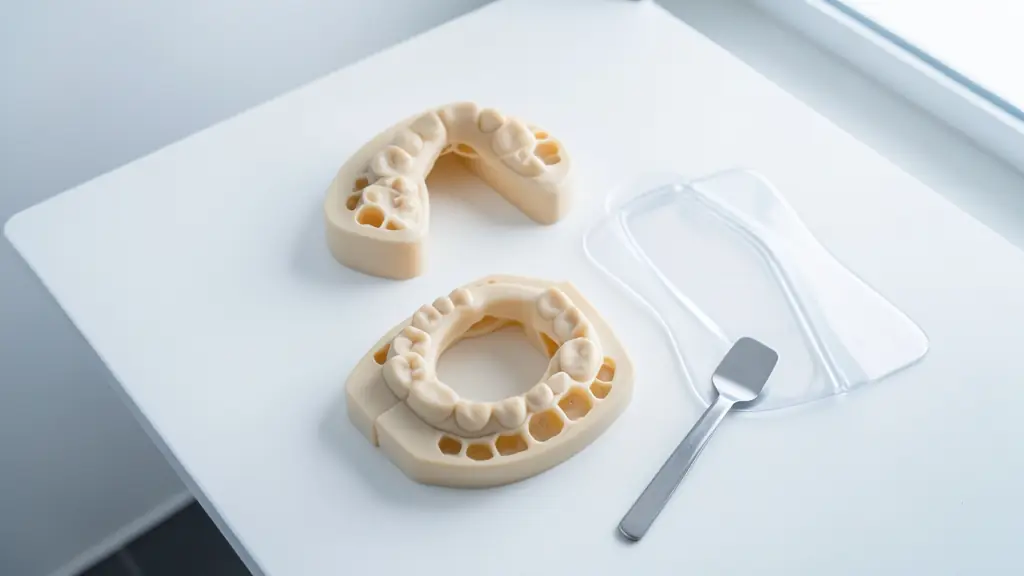
Plaster and impression trays are giving way to a file. The practice takes an intraoral scan, the STL lands in the lab's inbox, and a resin printer produces the model overnight. A Sandton lab weighing a bureau against its own printer is asking the right question, because both work: one adds a courier day, the other adds a resin bench, a wash and cure station and someone who keeps it calibrated. Here is what a print bureau can and cannot do for a lab.
What labs send out to print
- Study and diagnostic models for case planning and patient discussion.
- Working models with removable dies for crown and bridge work.
- Aligner and retainer models, often in a series of steps, for thermoforming.
- Custom tray and base plate blanks and other lab parts, in resins whose maker lists the use.
- Archive copies of old cases, reprinted only when needed.
Bureau or your own printer
A bureau suits a lab printing a few models a week, or one that needs overflow cover in a busy month. You pay per model, you need no resin stock, and the bureau carries the failed prints. The catch is the courier, the cut off time for overnight work and less control over the queue.
Owning a printer pays when the volume is steady. Run the numbers in the buy or outsource calculator, and count the training, the resin shelf life and the time a technician spends washing and curing.
Model resin against anything in the mouth
Model and lab resins are for the bench. Anything that touches a patient, such as a surgical guide, a splint or a temporary, must use a resin and process the maker has registered for that use, follow the maker's instructions, and is the clinician's decision. SAHPRA rules cover medical devices in general; check with your professional body.
We claim no dental approval, and a general print shop should not offer intraoral parts. Ask for a lab bureau that names the resin it uses.
Sending scans that print well
- Export the STL from the scanner software, one file per arch, in millimetres.
- Say whether the model is solid or hollow, and whether you want a base added.
- Mark dies, analogues and any area where accuracy matters most.
- Give the practice's date and the courier address.
See print from an STL file for the file checks a shop runs.
What to put in your request
- The kind of model: study, working or aligner
- How many arches a week or per case
- Solid or hollow, with or without a base
- The resin you expect, if you have a preference
- Practice deadline and courier address
Dental Models: who orders it and why
- Makers and hobbyists: not a hobby job; models and lab parts are ordered by labs and practices
- Schools, colleges and makerspaces: dental technology students printing study models from scan files for practicals
- Engineers and product designers: fixtures and holders for lab equipment and scanner calibration pieces
- Small businesses and sellers: small labs sending overflow models out instead of buying a second printer
- Factories, mines and workshops: bureaus running regular aligner model series for practices around the country
- Dental labs and clinics: study, working and aligner models and lab parts; intraoral items need registered resin
- Car owners and panel shops: not usually a car job; the same resin bureaus also print small trim parts
- Architects, artists and prop makers: anatomy models for teaching displays and medical illustration references