
Understanding the concept of a 3D printer machine
Definition and core components
In South Africa’s small towns, a compact 3D printer sits on a kitchen table or workshop bench, turning imagination into tangible tools. A 2024 survey shows makers cutting prototyping cycles by about 60%, proof that curiosity travels far from the city lights. what is 3d printer machine? It’s a device that turns digital designs into real objects by building them layer by layer from melted plastic and, increasingly, other materials.
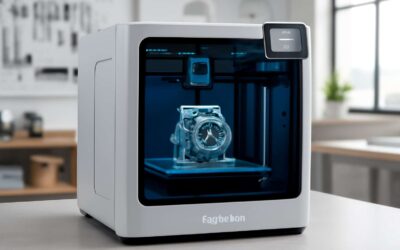
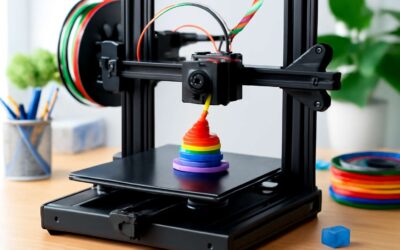
Definition and core components unfold the concept. At its heart, a 3D printer is an additive manufacturing device that creates objects by depositing material. The main components include a sturdy frame, a motion system, an extrusion system, a heated build plate, a control board, and a power supply. For readers new to the field, the following snapshot highlights essentials:
- Frame and chassis for stability
- Motion system with rails or belts
- Extruder and hotend to melt and lay material
- Heated build plate for even bonding
- Control board and software to guide printing
How a 3D printer works from digital model to physical print
Across South Africa’s towns and kitchens, a compact 3D printer sits on a bench and turns ideas into tools in hours. A 2024 survey shows prototyping cycles dropping by about 60%, proof that curiosity travels far from the city lights. To answer what is 3d printer machine, think of it as a device that builds objects by layering melted plastic and other materials, guided by a digital file.
The path from digital model to physical print follows a clear flow.
- Prepare the digital model in CAD or 3D software.
- Export and slice to generate the printer’s toolpaths (G-code).
- Print, then post-process to achieve the final finish.
In practice, this simple chain unlocks rapid prototyping and on-demand tooling in South Africa’s small shops.
Key technologies in 3D printing
Every great tool begins with a question, and what is 3d printer machine invites a tour of the material world. A 2024 survey shows prototyping cycles dropping by about 60%, proof that design can leap from idea to object in hours. The machine translates a digital model into tangible parts by layering melted plastic and other materials, guided by a file. In South Africa’s towns and kitchens, these devices turn vision into object, one layer at a time.
Key technologies in 3D printing include:
- FDM/FFF: extrusion of thermoplastic filament
- SLA/DLP: resin cured by light for high detail
- SLS/PBF: laser sinters powder into robust parts
Beyond method, the choice of technology maps onto materials, speed, and finish. In South Africa’s growing ecosystems of makers, these capabilities translate into local problem-solving—kinetic prototypes, durable jigs, and customised components—without waiting weeks for outsourced fabrication.
Types of 3D printer machines
FDM/FFF overview and practical use
More offices are treating desktop printers as productivity multipliers, with industry observers noting double-digit growth in small-batch manufacturing. what is 3d printer machine? In simple terms, it’s a device that turns digital designs into tangible parts, layer by layer, with surprising speed and precision.
FDM, or Fused Deposition Modeling, also known as FFF, dominates the hobbyist and prototyping world. It works by extruding a heated thermoplastic filament through a nozzle that sweeps the print bed, laying down lines of plastic that fuse as they cool. For practical use, this means rapid concept validation, custom jigs, and light-duty end-use components right here in South Africa’s workshops and studios, with a dash of coffee-fueled bench banter.
Common practical applications include:
- Rapid prototyping of product concepts
- Custom jigs, fixtures, and tool holders
- Lightweight end-use parts for non-structural roles
SLA and DLP: resin-based printing
In resin-based printing, SLA and DLP carve out a niche for ultra-fine detail and smooth surfaces, a segment currently riding double-digit growth as studios embrace in-house prototyping. For readers curious about what is 3d printer machine in this class, a resin system cures photosensitive material into solid parts with remarkable accuracy. SLA uses a focused laser to trace each layer in a vat, while DLP projects an entire layer at once with a digital light source, speeding up the process without sacrificing resolution. Both excel at miniature figurines, dental models, and jewelry masters where fit and finish matter.
- exceptional detail and smooth surface finish
- material variety—rigid, flexible, castable resins
- post-processing and safety considerations
In the South African maker scene, resin printers pair with design studios for high-end prototypes, small-batch production, and display-quality models, turning ideas into tangible assets with speed and patience.
SLS and other powder-based systems
Powder-based 3D printing, led by SLS, is the backbone of durable, production-grade parts. what is 3d printer machine? Double-digit growth is fueling adoption as studios and manufacturers push for in-house tooling. In these systems, a laser or inkjet head fuses fine powder—nylon, polyamides, or metal blends—layer by layer. The finished parts resist impact and heat, and they require less post-processing than some resin methods. These factors make powder systems ideal for engineering prototypes and small runs.
- Superior strength and good dimensional stability for functional parts
- Material variety, from nylon and glass-filled polymers to metal blends
- No support structures needed; the powder bed supports overhangs during build
- Post-processing options include depowdering, curing, and surface finishing
In South Africa, makerspaces, studios, and manufacturers embrace powder-based printers for high-precision prototypes, small-batch production, and tools-ready parts. The technology suits local design work, where quick iteration and durable components matter in sectors from automotive to prototyping labs.
Specialty 3D printing technologies
In SA studios, a single machine can rewrite the timeline from concept to tool-ready part. “Speed is our most valuable material,” a designer once told me. So what is 3d printer machine? It’s a spectrum of specialty platforms that push beyond the familiar plastics, from binder jetting and material jetting to directed energy deposition and laminated object manufacturing. These systems trade raw speed for capabilities—detail, scale, and material versatility—that general-purpose printers rarely match.
- Binder jetting for ceramics, sands, and metal alloys
- Material jetting for ultra-high-detail surfaces
- Directed energy deposition for large, strong components
- Laminated object manufacturing for rapid, cost-efficient sheets
Across South Africa, makerspaces and manufacturers are harnessing these technologies for high-precision prototypes, small-batch tooling, and production-adjacent parts.
Materials and applications
Filament and resin materials: what to choose
In the world of additive manufacturing, the materials you pick drive the entire outcome. What is 3d printer machine? It’s only as capable as its filament or resin—choose wisely, and your prints feel engineered, not lucky. The right material handles strength, finish, and heat with ease. In South Africa, local supply and service shape every project.
Filament materials cover everyday prototyping and production parts.
- PLA: easy prints, good for concepts and fixtures
- PETG: tougher, chemical resistant, versatile
- ABS: strong, heat-tolerant, needs enclosure
Resin materials offer precision and finish for high-detail parts. Standard, tough, and flexible resins unlock smooth surfaces, fine features, and accurate fits for crafts, dentistry, and casting patterns.
Material properties and performance
Materials decide destiny in 3D printing. In South Africa, local supply and service can turn a concept into a dependable part faster than a coffee break. In this context, what is 3d printer machine if not the vessel that translates design into durable, heat-ready pieces? The right material balances strength, finish, and reliability.
- Dimensional stability for tight tolerances
- Surface finish to reduce post-processing
- Thermal and chemical resistance for real-world use
- Impact toughness vs. rigidity for functional parts
Applications range from quick concept models to functional fixtures and end-use prototypes—each demanding a different property profile. Material choice keeps parts aligned with real-world use, with SA suppliers keeping stock and support within reach, ensuring predictable performance and smoother project journeys.
Post-processing and finishing techniques
what is 3d printer machine if not the vessel that translates design into durable, heat-ready pieces. Material choice and finishing determine how a part performs in real life. In South Africa, local suppliers speed post-processing, turning concepts into dependable parts faster than a coffee break.
- Remove supports and clean
- Sand, fill, and smooth
- Prime, paint, or coat
- Post-cure or seal (material dependent)
- Inspect tolerances and fit
For SA teams chasing precision, finishing choices translate to reliable, ready-to-use parts.
Industry use cases: prototyping to production
Every factory hums with potential when we ask one question aloud: what is 3d printer machine. The answer is a bridge that translates imagination into solid, testable form—and it does so with a quiet efficiency that surprises even seasoned engineers.
Materials choice shapes performance. Polymers deliver lightness and intricate detail; metals bring strength and heat resistance; composites tune stiffness and thermal behavior. In industry, players move from mock-ups to end-use parts with confidence, guided by data and a willingness to iterate.
- Prototyping automotive fixtures and enclosures
- Low-volume production of custom tools and jigs
- End-use components in electronics and household goods
- Medical devices and educational aids
In South Africa, local suppliers shorten the loop from concept to impact, letting teams prototype quickly and scale with intention.
Education and hobbyist applications
In classrooms and maker spaces, what is 3d printer machine becomes a passport to tangible learning. I’ve watched students and hobbyists turn sketches into testable parts in hours, not weeks. Polymers give light, intricate prototypes, while resins and metal composites unlock more robust demonstrations. It’s learning by doing: design, print, test, refine, and watch curiosity turn into capability.
For education and hobbyists, practical uses include:
- Educational projects and classroom demonstrations that spark curiosity
- Replacement parts, tools, and jigs for at-home makers
- Miniature models, props, and gaming accessories for hobbyists
- DIY robotics and electronics components for hands-on learning
In South Africa, local suppliers shorten the loop from concept to impact, letting schools and hobby clubs prototype quickly and scale with intention.
How to choose and buy a 3D printer machine
Assessing needs: build volume, resolution, and speed
Understanding what is 3d printer machine matters more than the latest firmware. A recent SA industry poll shows 72% of first-time buyers regret skimping on build volume. In short, picking the right machine starts with knowing your largest potential part.
Assess needs by three levers: build volume, resolution, and speed. Build volume determines the maximum part size; resolution (layer height) controls surface finish and fine features; speed affects throughput and printer stability. Bigger isn’t always better—quality hinges on how these interact with your chosen material.
- Build volume aligned with typical projects
- Resolution and nozzle size for detail vs. speed
- Print speed and mechanical reliability for consistent results
As you navigate SA suppliers, compatibility with local materials and service is worth noting. The right fit feels like a reliable teammate, not a temperamental show pony.
Cost considerations: upfront vs ongoing maintenance
Money saved on upfront price often costs more later—maintenance, calibration, downtime. In South Africa, electricity costs and service delays can push the total cost of ownership into focus, turning price tags into moral calculations.
Understanding what is 3d printer machine reveals a lifecycle mindset: the upfront price, ongoing consumables, maintenance, energy, and replacement parts all bleed into the final bill. Local realities matter—availability of parts and service in SA can tilt value as much as the listed cost.
Cost considerations include:
- Upfront price and financing
- Consumables per part and waste
- Maintenance and replacement parts
- Service support and warranty coverage
- Energy consumption and downtime
Ultimately, the right choice balances affordability today with reliability tomorrow, ensuring the machine remains a steadfast companion rather than a financial specter.
Software ecosystem and workflow
Software defines the path from idea to part. The best projects align CAD, slicer, and firmware to cut waste and speed work. what is 3d printer machine reminds us it’s a coordinated system, not a lone device. In SA, local support matters as price does.
Seek a software environment that breathes: compatible formats, stable slicer pipelines, and a clear firmware path. The choice matters because your workflow should feel seamless, not hobbling. Key considerations include:
- Software compatibility across CAD, slicer, firmware
- Open vs closed systems and upgrade cadence
- Cloud tools and local service support
Beyond hardware specs, the workflow—from model to print—depends on data integrity, color management, and post-processing hooks. In SA, parts availability and service speed can influence value more than price, making the software ecosystem a quiet but decisive partner.

0 Comments