
Additive Manufacturing Fundamentals and Trends
What is additive manufacturing and why it matters
Additive manufacturing has moved from niche prototyping to steady production in many industries. In the last five years, adoption has grown in double digits, helping companies cut lead times and reimagine design.
At its core, additive manufacturing builds objects layer by layer from a digital model, unlocking design freedom and material efficiency. The 3d printing technology landscape favours rapid iteration, lightweight parts, and customised tooling—advances that resonate with South African manufacturers seeking resilience.
- Speed to market and reduced tooling costs
- Material breadth—from polymers to metal alloys
- On-demand production and local supply chains
For South Africa readers, the trend means staying adaptable, shrinking inventories, and turning ambitious ideas into tangible parts—fast.
Common 3D printing processes explained (FDM, SLA, SLS, MJP, DMLS)
South African firms embracing 3d printing technology report production cycles accelerating by as much as 40%, turning rough sketches into working parts faster than ever.
At its heart, additive manufacturing deposits material layer by layer from a digital model, unlocking geometry once deemed impossible and enabling light-touch prototyping to heavy-duty production—like a forge waking in a modern city.
Key processes shaping the landscape include:
- FDM (Fused Deposition Modeling): melted thermoplastics extruded in thin beads for robust, low-cost prototypes.
- SLA (Stereolithography): ultraviolet-curing resins yield smooth surfaces and fine detail.
- SLS (Selective Laser Sintering): a laser fuses powders in a bed—no supports, strong parts.
- MJP (Multi Jet Printing): photopolymers jetted and cured for high-resolution, multi-material parts.
- DMLS (Direct Metal Laser Sintering): metal powders fused by a laser for durable alloy parts.
Across South Africa, these technologies enable on-demand production, shrinking inventories and reshaping local supply chains through versatile, local fabrication.
Materials overview: plastics, polymers, metals, and composites
South Africa is waking up to a quiet revolution: up to 40% faster production cycles thanks to 3d printing technology. Additive manufacturing deposits material layer by layer from a digital model, unlocking geometry once deemed impossible and speeding up everything from prototypes to end-use parts.
Material families are the backbone: plastics and polymers for low-cost, rapid prototyping; metals for robust, durable components; and composites for stiffness and weight savings—plus heat resilience that keeps your parts from melting under pressure.
- Plastics and polymers: ABS, PLA, PETG—great for concept models and functional tests.
- Metals: aluminum, stainless steel, titanium alloys—high strength and wear resistance.
- Composites: carbon-fiber-reinforced polymers—lightweight with exceptional stiffness.
In South Africa, these materials power on-demand production and local fabrication, shrinking inventories and reshaping supply chains through near-shoring and customised tooling.
Industrial vs consumer-grade printers: capacity and use-cases
Across South Africa, 3d printing technology is rewriting what’s possible in days, not weeks. In labs and workshops, prototyping cycles can drop by up to 50%, turning concepts into tangible parts overnight. The pace of iteration is the new differentiator, and it’s reshaping how fast ideas become market-ready.
Industrial-grade printers deliver bigger build volumes, higher uptime, and broader material compatibility—crucial for end-use parts and rigorous testing. Consumer-grade machines, by contrast, excel in accessibility, lower upfront costs, and rapid learning curves—perfect for concept models and education. The choice isn’t just about speed but about aligning capability with your project’s risk, scale, and budget.
- Industrial-grade: high throughput, reliable performance, diverse materials
- Consumer-grade: lower cost, easier maintenance, fast skill development
- Hybrid workflows: blend both for quick prototyping and scalable production
Current and emerging trends in additive manufacturing
Within South Africa’s labs and design rooms, 3d printing technology is rewriting time itself: ideas migrate from chalk to concrete in days, not weeks. Additive manufacturing is fundamentally a layer-by-layer craft, a sculptor choosing materials and geometry with digital precision. It translates intention into tangible form, letting engineers test fit, function, and form earlier than ever. At its core, the fundamentals are simple: build what you model, adjust what you measure, iterate with intention.
Current and emerging trends are reshaping strategy and scale.
- Digital twins and real-time simulation speed design-to-test cycles
- Expanding material families, including advanced polymers, ceramics, and metals
- AI-assisted topology optimization unleashing complex, efficient geometries
- Hybrid workflows that blend rapid prototyping with scalable production
From education to enterprise, distributed, on-demand manufacturing is reshaping regional economies. Local labs can print parts as needed, shrinking inventory and lead times while encouraging sustainable practice across industries.
Technical Deep-Dive: 3D Printing Processes
Fused Deposition Modeling and its typical applications
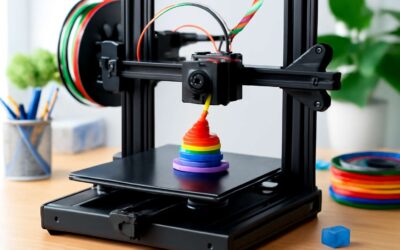
“Speed is the new currency of design,” echoes engineers across South Africa as 3d printing technology turns ideas into tangible parts in hours rather than days. Fused Deposition Modeling builds components by extruding a heated thermoplastic filament through a nozzle, tracing CAD paths with precision. Layer after layer, materials such as PLA, ABS, and PETG become prototypes, jigs, or light-duty housings—selected for strength, finish, and cost. The method excels at rapid iteration, design validation, and scenario testing within both academic labs and industrial shops.
In practice, typical applications include:
- Rapid prototyping to test fit and form
- Functional jigs and fixtures for assembly lines
- Custom housings, demos, and educational models
Stereolithography and Digital Light Processing differences
Light is a sculptor, shaping parts faster than a workshop door. In the realm of 3d printing technology, SLA and DLP cast light differently: SLA uses a laser to trace resin; DLP projects an image to cure layers at once. SLA reaches micro-detail with 25 micron layer heights, yielding smooth surfaces for micro-gears and dental guides. DLP focuses on speed and batch curing. Resin options range from standard to tough and flexible, with post-curing shaping final properties.
- Laser-based SLA for ultra-fine detail and smooth finishes
- Projector-driven DLP for higher throughput
- Resin selection and post-curing shape final properties
Choosing in a South African context means throughput, finish, and post-processing. SLA yields flawless surfaces for prototypes; DLP excels when volume and speed matter. For education and engineering teams, these processes fit brisk, real-world workflows, turning concepts into ready models. 3d printing technology continues to reshape how ideas become tangible.
Selective Laser Sintering and metal 3D printing basics
Speed is the new currency of design, and laser-powered SLS is turning blueprints into tangible parts at a pace old workshops envy. In the world of 3d printing technology, Selective Laser Sintering and metal printing aren’t curiosities—they’re daily tools in SA labs.
Selective Laser Sintering fuses polymer powder with a focused laser in a heated bed, building parts layer by layer without supports. PA12 nylons yield tough, accurate prototypes; typical layer heights of 0.08–0.2 mm strike a balance between detail and throughput. Post-processing includes depowdering and smoothing.
- Materials: nylon powders for SLS; metal powders for DMLS/SLM
- Process: sintering vs full melting; inert atmosphere and laser strategies
- Finish: heat treatment, HIP, and surface refinement
Metal 3d printing basics center on DMLS/SLM, where a laser fully melts metal powder to create dense, durable parts. Common alloys include stainless steel and titanium; expect inert environments, careful handling, and post-build treatments for dimensional stability.
Material jetting and binder jetting: capabilities and limitations
In the hush between blueprint and burr, 3d printing technology reveals its twin faces: material jetting and binder jetting. Material jetting deposits UV-curable droplets that cure into glossy, multicolor parts with razor-edged detail. Binder jetting, by contrast, fuses powder with a liquid binder, unlocking rapid builds and complex geometries that would flail under other processes. Each path pursues speed and precision, but their destinies diverge in finish and density.
Capabilities and limits unfold as follows:
- High-detail resolution and color fidelity
- Multi-material and multi-color builds in a single job
- Post-processing dictates final density and strength, with curing or sintering and surface refinement required
In South Africa’s labs, these tools carve a path through design-to-part workflows, offering tactile realism without the long wait that hamstrings innovation. A careful balance of material choice, post-processing, and budget turns aspiration into tangible parts.
Materials and Engineering for 3D Printing
Overview of thermoplastics, photopolymers, metals, and composites
Across South Africa’s rural workshops, 3d printing technology is turning rough sketches into reliable tools. A recent industry survey found that prototype cycles run 40% faster when additively manufactured parts are part of the workflow. That speed reshapes what’s possible, from spare farm parts to bespoke jigs in small machine shops.
Materials shape every outcome in 3d printing technology. Thermoplastics offer affordability and toughness for everyday parts. Photopolymers deliver fine detail and rapid cures for intricate fits. Metals bring strength, heat resistance, and long life. Composites fuse lightness with stiffness for demanding environments.
- Thermoplastics: PLA, ABS, PETG
- Photopolymers: epoxy and acrylate resins used in SLA/DLP
- Metals: stainless steel, aluminum, titanium alloys
- Composites: carbon-fiber filled nylon, fiber-reinforced polymers
Together, these families empower designers and technicians to iterate with purpose, harnessing 3d printing technology to serve communities across the country.
Key material properties for print quality and performance
Prototype cycles run 40% faster when additively manufactured parts are part of the workflow—the quiet revolution behind 3d printing technology in South Africa’s workshops. Material choices determine how swiftly a design becomes a tool, influencing strength, finish, and reliability as the layers settle.
Key material properties shaping print quality and performance include:
- Tensile strength and impact resistance
- Thermal stability and low creep
- Dimensional accuracy and consistent layer adhesion
- Wear resistance and surface finish
In practice, engineers balance these traits with design intent, turning material behavior into predictable performance—giving parts that endure heat, vibration, and wear with the quiet certainty of craft.
Availability, cost, and sustainability considerations
In South Africa’s shops, engineers report that prototyping cycles can shrink by about 40% when 3d printing technology is woven into the workflow—an understated revolution that reshapes cost and tempo. Availability hinges on localized supply chains and open material ecosystems, letting teams select plastics, metals, or composites with a clear conscience about sustainability.
Material choices impact lifecycle cost and environmental footprint as much as performance. We weigh tiered options—from recyclable polymers to metal powders—against durability needs, energy use, and end-of-life recovery. With 3d printing technology, design intent can pivot to reuse and repair, not disposal.
- Availability and supply chain resilience
- Cost implications and total cost of ownership
- Sustainability and life-cycle considerations
These factors shape engineering strategies in South Africa, balancing speed, savings, and stewardship as layers settle into functional parts.
Advanced materials and multi-material printing
3d printing technology has evolved into a toolkit for materials engineers who crave performance with fewer parts. In South Africa, advanced materials and multi-material printing let teams tailor strength, elasticity, and heat tolerance in a single build. By pairing polymers with reinforcing fibers or metallic inks, engineers replace assemblies with monolithic parts, trimming weight and eliminating interfaces. The resulting parts embody a design language where microstructure is tuned for durability and energy efficiency from the first layer.
- Hybrid polymers with carbon-fiber reinforcement
- Metal–polymer hybrids for heat management and conductivity
- Functionally graded materials for property variation along a component
These capabilities lift additive manufacturing toward production-ready engineering, inviting designers to imagine durable, repairable systems that align with sustainability imperatives.
Recycling and lifecycle considerations in additive manufacturing
Recent industry chatter suggests up to 70% of additive-manufacturing waste can be reclaimed into usable parts when design, materials, and processes are aligned for end-of-life. In South Africa, that circularity isn’t a dream—it’s a competitive edge in a market hungry for efficiency and accountability. 3d printing technology offers a lifecycle mindset: build for longevity, design for disassembly, and treat scrap as a resource rather than a nuisance.
To turn that vision into practice, consider these touchpoints:
- Design for disassembly and modularity
- Material choices that support closed-loop reclamation
- Efficient post-processing to maximize re-use
Beyond the lab, lifecycle data and supplier transparency help South Africa’s manufacturers prove value, aligning innovation with sustainability goals and responsible stewardship.
Applications Across Industries
Aerospace and automotive: lightweight components and rapid prototyping
From my side of the workshop, 3d printing technology is a quiet revolution in aerospace and automotive. Industry analysts say additive manufacturing can cut prototyping time by up to 50% and reduce part weight by about a third. It’s a surge of speed and possibility that I’ve watched translate into real design progress.
In these sectors, the appeal lies in lightweight components and rapid iteration. We sculpt complex geometries for better aerodynamics and efficient cooling, then test fit and performance in days instead of months.
- Lightweight components with optimized geometries
- Rapid prototype-to-test cycles for validation
- Reduced assembly needs and tooling
In South Africa, this capability strengthens local supply chains, enables agile customization, and invites bold collaborations between designers and manufacturers.
Healthcare: prosthetics, implants, and personalized devices
In healthcare, 3d printing technology is turning care into a personal craft. Pilot programs report prosthetics and implants going from concept to patient up to 50% faster, a speed that changes every rural clinic and city hospital alike.
Prosthetics, implants, and personalized devices are ending up exactly where they’re needed, shaped to each patient’s anatomy and daily life.
- Prosthetics tailored to fit and function
- Implants customized for precise alignment
- Rehabilitation devices designed for home use
In South Africa, communities benefit from local manufacturing, rapid iteration, and collaborative care between designers and clinicians.
Consumer products, tooling, and rapid prototyping workflows
Speed and customization are the new currency of invention. 3d printing technology lets brands turn ideas into tangible products in days, not years, letting consumer gadgets reflect South African tastes—from ergonomic kitchen tools to personalized storage solutions.
Tooling and rapid prototyping workflows power lean, adaptable operations. Teams print sturdy jigs, fixtures, and spare parts on demand, slashing downtime and inventory costs while validating form and function before any full-scale run.
- Faster iteration cycles for consumer devices
- On-demand tooling and fixtures that cut downtime
- Localized production supporting small businesses and communities
Across South Africa, SMEs, artisans, and startups collaborate with designers and manufacturers to iterate locally, tighten supply chains, and deliver products that truly fit our markets.
Industrial manufacturing: tooling, jigs, and production aids
Across South Africa’s factory floors, 3d printing technology is turning weeks into days. On-demand tooling and fixtures mean downtime shrinks and prototyping cycles sprint ahead—no more waiting on that courier who treats a rush order like a myth!
Industrial manufacturing benefits from durable jigs, assembly aids, and production fixtures that adapt to changing lines. By printing in-house, teams validate fit and function before costly tooling runs, reducing waste and inventory while speeding changeovers between products.
- On-demand tooling cuts downtime and accelerates ramp-up
- Custom jigs improve repeatability and quality
- Compact production aids streamline assembly lines
In sum, industrial manufacturing workflows gain from reliable, locally produced tooling and fixtures that align with lean principles, bolstering resilience for SA’s supply chains.
Architecture, education, and creative design applications
‘This changes how we dream,’ a Cape Town architect once told me. 3d printing technology is slipping from glossy brochures into real workflows across South Africa, turning sketches into tangible objects with speed and tactility.
Within these fields, the impact is palpable:
- Architectural scale models that reveal context, lighting, and sightlines.
- Educational aids that make geometry and anatomy tangible for students.
- Creative design prototypes and art pieces that iterate quickly and proudly.
From lecture halls to design studios, 3d printing technology accelerates dialogue—models that provoke critique, tangible teaching aids, and prototypes that travel from idea to discussion in days rather than weeks.

0 Comments