
Large-Scale 3D Printing Landscape
What qualifies as a big 3D printer?
Across South Africa’s design studios and workshops, the big 3d printer is reshaping what’s possible in plastic and composite dreams. A striking stat: last year demand for large-format 3D printing surged by 40%, and the climb shows no sign of slowing. I’ve seen teams turn oversized concepts into tangible prototypes with astonishing fidelity—and they do it on a manageable footprint.
What qualifies as a big 3d printer? From my experience, consider these essentials:
- Enclosed build area and stable Z height
- Material range and compatibility (PLA to stronger composites)
- Reliable aftercare and supported speeds
- Safety features and chamber control
In the local landscape, operators balance footprint with throughput, and I’ve watched labs in SA push margins in aerospace, automotive, and architectural modeling. The right big 3d printer blends precision with practicality, turning ambitious ideas into repeatable results—and it does so with a quiet confidence that makes teams feel heard.
Build volumes and axis configurations
Across South Africa’s design studios, the big 3d printer is no longer a novelty but a production partner. A 40% surge in demand last year proves these giants are here to stay.
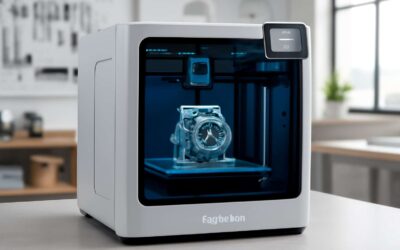
Large build volumes demand axis choreography: broad X and Y on a stout gantry, with a precise Z keeping tall features honest. Build envelopes commonly reach 1.5–2 m, and Cartesian layouts offer predictable motion and repeatable fidelity. The big 3d printer benefits from an enclosed chamber.
Key axis decisions, briefly:
- Motion system: belt vs screw
- Enclosure and thermal control
In SA labs, footprint meets throughput with a quiet confidence; the right big 3d printer translates ambitious ideas into tangible, repeatable results.
Materials and extrusion capabilities at scale
Across South Africa’s design studios, the big 3d printer is no longer a curiosity but a production partner. A 40% surge in demand last year is a bold drumbeat signaling it’s here to stay. These giants translate ideas into tangible parts with a patient, almost alchemical fidelity.
Large-scale printing thrives on a landscape of materials: carbon-fiber reinforced nylons, tough polycarbonates, and elastomeric urethanes. Extrusion heads span 0.6–0.8 mm, with some 1.0 mm options, while hotends push toward 350–400°C and heated chambers tame warps on sprawling builds.
- Engineering polymers and CF composites
- Nylon variants and high‑temperature polycarbonates
- Elastomeric and flexible resins
In this arena, throughput meets precision, and these machines become steadfast partners in translating audacious sketches into reliable, scalable reality.
Industries driving demand for large-format printers
Across South Africa’s design studios, a 40% surge in demand last year turned the big 3d printer from curiosity into production partner. In workshops from Cape Town to Johannesburg, these giants translate bold sketches into tangible parts with patient fidelity—and a hint of the uncanny.
Large-scale printing thrives where industries demand scale and speed. In this landscape, growth comes from sectors that push printers to the edge—and beyond:
- Automotive and aerospace prototyping
- Architecture, construction and urban design models
- Film, theatre props, and experiential displays
- Energy, mining and heavy-equipment components
- Medical devices and ergonomic tooling
Throughput meets precision on factory floors across SA, as the big 3d printer translates audacious concepts into reliable, scalable reality. These machines stand as patient partners, turning a sketch into a durable part with alchemical fidelity.
Big 3D Printer Types and Core Technologies
FDM large-format printers: features and considerations
Across South Africa’s bustling studios and workshops, the big 3d printer is less a gadget and more a reliable partner. “Size is a feature, not a flaw,” a seasoned engineer likes to remind us, and in large-format FDM that rings true: reliability and reach trump mere speed. The right model blends rugged hardware with thoughtful software, delivering parts that stand up to real-world use with minimal drama.
- Direct-drive vs Bowden for filament control
- Enclosed chambers to stabilize temperatures
- Multi-head or dual extrusion for versatility
Core technologies and features define the category: stable temperature management, robust hotends, precise bed leveling, and reliable sensors with optional closed-loop feedback. In practice, the blend of dependable mechanics and smart firmware keeps production smooth without the circus of troubleshooting.
Behind every elegant print lies a service and knowledge network in South Africa that makes scale feasible, from local distributors to online communities.
SLA and MSLA for large parts: resin-based capabilities
Scale changes everything. In South Africa, a big 3d printer isn’t just a gadget—it’s a production bridge. “Size is a feature, not a flaw,” a veteran engineer likes to say, and resin work proves it: SLA and MSLA shine on large parts where detail and surface finish matter most.
With SLA and MSLA, the focus shifts from speed to surface quality and detail. Core technologies—stable temperature management, precise exposure control, robust vats, and accurate leveling—let resin parts come out ready for use after controlled curing, without the drama of post-build surprises.
- Mask-based exposure control for uniform cure
- Resins engineered for high detail and toughness
- Large-format vat and build plate stability
- Post-curing and surface finishing workflows
Across South Africa, service networks and knowledge communities keep these systems productive, turning resin prints into dependable components rather than experimental runs.
Industrial vs desktop scale: entry points and trade-offs
Across South Africa’s industrial corridors, a big 3d printer isn’t a toy; it’s a production bridge, turning prototyping into scalable manufacture. “Size is a feature, not a flaw,” a veteran engineer likes to say, and scale proves it—large builds demand patience, not bravado.
Industrial and desktop scales each carve a doorway with distinct trade-offs.
- Build volume and automation reach
- Service networks and uptime guarantees
- Material ecosystems and thermal management
- Post-processing workflows and quality assurance
The core technologies that anchor these choices include stable temperature management, precise exposure or feed control, robust vats or hoppers, and accurate leveling. The big 3d printer promises predictable cycles and a consistent surface finish at scale, marrying fidelity with throughput in resin or extrusion pathways alike.
In the South African context, local knowledge communities and service ecosystems translate global advances into reliable production reality, shaping how a big 3d printer fits into existing lines and capacities.
Hybrid and multi-material options
Size is a feature, not a flaw, a veteran engineer likes to say, and it rings true on South Africa’s factory floors. A big 3d printer turns bold ideas into scalable parts, converting prototypes into production-ready components with a cadence that keeps local suppliers in the loop. In this landscape, bigger isn’t vanity—it’s velocity.
Hybrid and multi-material options push the category beyond simple replication.
- Hybrid platforms fuse FDM and resin processes within one workflow, enabling rigid bodies with fine surface finishes in a single build.
- Multi-material extrusion uses several hotends to co-deposit diverse polymers, cutting assembly steps and time-to-part.
- Segmented resin vats allow rapid switching between formulations at scale without lengthy retooling.
These configurations demand precise motion control and careful thermal management to prevent cross-contamination and delamination.
Core technologies anchor these capabilities: stable temperature management that keeps materials within tolerances; calibrated exposure or feed control matched to resin or filament; and robust vats, hoppers, and leveling routines that ensure repeatability across shifts. When aligned, the big 3d printer delivers predictable cycles and a consistent surface, even in resin or extrusion pathways.
Performance, Reliability, and Print Quality at Scale
Print quality metrics and measurement methods
Scale reveals the character of design. “Scale reveals the true character of your design,” a veteran operator says. For the big 3d printer in SA factories, performance means consistency under heat, precise extrusion, and steady uptime—a quiet, muscular throughput that endures long runs.
Reliability is built on thermal management, modular parts, and a service ecosystem that scales with demand. Metrics like MTBF and mean time to repair become real roadmaps, guiding maintenance before faults bloom and downtime hurts production schedules.
- Dimensional accuracy and tolerances measured with calibrated micrometers
- Surface finish and layer adhesion assessed by profilometry and inspection
- Material consistency and flow verified through mass balance and test prints
Print quality at scale is a chorus of tiny decisions—repeatable layer height, consistent extrusion, and controlled warping across the build envelope. Measurement methods blend in-situ sensors, post-process scanning, and statistical process control to reveal truth in every footprint.
Maintaining calibration and avoiding common issues
Across SA factories, an extra hour of uptime translates into tens of thousands in revenue. Performance hinges on a big 3d printer that sustains heat, delivers precise extrusion, and stays online through long runs. Calibration is ongoing: thermal management, stable motion, and a predictable build envelope keep throughput reliable.
- Thermal stability
- Modular components
- Scalable service network
Reliability grows from robust thermal design, modular parts, and a service ecosystem that scales with demand. MTBF informs maintenance and reduces downtime, while preemptive checks keep the line humming!
Print quality at scale is a chorus of tiny decisions—repeatable layer height, consistent extrusion, and controlled warping. In-situ sensors and profilometry expose drift, preserving calibration and truth in every footprint. The big 3d printer rewards discipline with accurate, repeatable results.
Reliability, uptime, and maintenance best practices
One hour of uptime on South Africa’s factory floors can unlock tens of thousands in revenue. Performance hinges on heat that stays stable, extrusion that stays precise, and a printer that runs long jobs without interruption. The big 3d printer thrives when duty cycles are predictable, delivering steady throughput across shifts.
Reliability grows from thoughtful thermal design, modular parts, and a service network that scales with demand. Maintenance becomes routine: scheduled checks, spare parts on hand, and remote monitoring that flags issues before they derail the line. Readiness cues keep the plant humming:
- Regular belt tension and alignment checks
- Visible spare parts inventory for quick swaps
- Remote diagnostics with proactive service response
Print quality at scale is a chorus of small, disciplined decisions: consistent extrusion, stable deposition, and warp control under heat. Onboard sensing catches drift early, keeping calibration honest so footprints remain true from first to last part.
Speed versus accuracy: optimizing large prints
Speed on the big 3d printer is a currency you must spend wisely on South Africa’s factory floors. On large-format jobs, throughput can transform a week into a day, yet precision cannot be traded for velocity. The trick is harmonizing path planning, extrusion rate, and layer cooling so bulk prints hold true from first layer to last, even when the clock is merciless.
Reliability anchors performance. A predictable duty cycle reduces interruptions and keeps shifts aligned. Thoughtful thermal design, modular components, and a service network that scales with demand turn a single machine into a workhorse.
- Thermal margins tracked in-flight
- Modular spares staged near the line
- Predictive analytics flagging drift before it propagates
Print quality at scale is the cumulative result of small, disciplined choices: stable deposition, constant extrusion, and warp suppression under heat. Onboard sensing detects drift early, calibration stays honest, and footprints remain true across long runs.
Procurement, Setup, and ROI for Big 3D Printers
Budgeting and total cost of ownership
In the pulse of modern manufacturing, the big 3d printer acts like a lighthouse for product teams—prototype cycles can shrink by up to 70%, turning rough ideas into workable parts in days rather than weeks.
Procurement and budgeting hinge on true total cost of ownership. Beyond the sticker price, energy, materials, wear parts, maintenance, and service plans shape value over the printer’s lifecycle.
- Capital expenditure
- Consumables and wear parts
- Maintenance and service
Setup and ROI follow the same arc: a deployment that minimizes downtime and accelerates validation translates into better design turnover and client demos. In South Africa, currency fluctuations and local service networks tilt the TCO, but the ROI remains compelling as the printer absorbs prototyping and production work that would otherwise require multiple machines.
Evaluation criteria: build volume, reliability, service
In South Africa’s high-velocity product cycles, choosing a big 3d printer is a decision that pays with momentum. The right procurement lens is built on build volume that fits your parts, reliability that endures, and a service footprint that acts like a lighthouse for product teams.
- Build volume aligned to your largest parts and nesting strategies
- Reliability under continuous use to shrink downtime
- Service networks and spare parts availability for rapid support
Setup and ROI hinge on minimizing downtime and speeding validation. A thoughtful deployment translates to quicker design turnovers and stronger demos, delivering tangible ROI as prototypes morph into production-ready parts—often offsetting multiple machines and driving cost of ownership down.
Sourcing, warranties, and vendor support
Procurement decisions in South Africa’s fast-moving manufacturing cycles hinge on three pillars: sourcing, warranties, and vendor support for the big 3d printer. A capable supplier footprint means local service teams, rapid spare parts, and clear SLAs that withstand currency volatility. This means evaluating warranty length, coverage, and the availability of regional technicians.
Setup considerations focus on installation, calibration, and staff onboarding. A deployment should minimize downtime and integrate with MES and ERP workflows. Check for on-site commissioning, operator training, and access to spare parts to keep validation cycles on track.
ROI hinges on reduced design turns, quicker demos, and a path from prototype to production. A well-supported deployment lowers total cost of ownership by avoiding repeated machine rentals and downtime. In the SA market, the right procurement translates to tangible productivity gains that repay the capital outlay sooner than expected.
ROI case studies and deployment strategies
Financing and leasing options for large-format printers
Prototype cycles begin the moment procurement widens its lens on a big 3d printer. Thoughtful vendor selection, seamless integration with existing workflow, and flexible funding set the stage for durable value. Financing and leasing options for large-format printers include:
- Finance lease
- Operating lease
- Vendor-backed loan
Setup means more than bolting the machine to a bench; it demands site readiness, clean power, ventilation, and software integration. On-site calibration, material handling readiness, and a measured training window keep the first prints stable and predictable. In South Africa, local service packages and regional partnerships help secure timely support during this phase.
ROI unfolds as uptime and throughput improve. When procurement aligns with predictable maintenance and supplier service, the payback becomes a narrative of shorter development cycles, reduced outsourcing, and steadier margins—printed into operation as soon as the first batch ships.

0 Comments