
Large-format 600mm build volume 3D printers: a comprehensive guide
Understanding build volume and capabilities
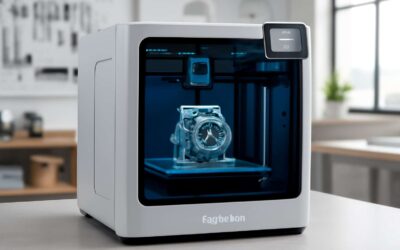
Large-format prints redefine what fits on the bench and in the budget—the 3d printer 600mm becomes a gateway to monolithic prototypes that once required assembly from multiple parts. In design studios and South African makerspaces, scale fosters ideas that once dissolved into compromise; this reach is not merely about size, it’s about narrative clarity for parts, enclosures, and fixtures. “Scale changes everything,” observes a local engineer, and the sentiment rings true when a single build reshapes a whole concept.
Key capabilities and considerations include:
- 600mm build envelope supports full-scale prototypes
- Rigid frame and heated bed for stability with a range of materials
- Smooth-axis drives and linear rails for consistent dimensional accuracy
- Enclosed chamber options for safety, odor control, and print reliability
Beyond the obvious heft, understanding build volume helps teams align expectations with the printer’s real-world performance in a South Africa context—where service, material availability, and power reliability shape how such large-format machines are deployed for lasting parts and fixtures.
Choosing a 600mm build volume printer
Scale bites back at the dull hum of conventional prototyping. In South Africa’s studios, a 3d printer 600mm turns weeks of assembly into a single breath-held print. A 40% reduction in lead times isn’t a fairy tale—it’s the new baseline when parts emerge whole from a cavernous build envelope. The narrative shifts from compromise to clarity, where enclosures, fixtures, and monolithic prototypes speak in a single, coherent form.
Choosing a 3d printer 600mm build-volume machine demands more than bravado; it’s a test of endurance, service, power reliability, and material reach. Look for a rigid frame, stable heated bed, and smooth-axis drives that keep tolerances honest across a full-scale model.
- Local after-sales support and spare parts
- Reliable power and climate control in SA facilities
- Material compatibility: PETG, ABS, nylon and composites
Upgrading and maintaining large-format printers
Across South Africa’s studios, the 3d printer 600mm doesn’t simply print; it redraws the timetable. What once took weeks now breathes in a single, careful draft, as scale meets discipline and the dark hum of production gives way to tangible form.
Upgrading and maintaining large-format printers is a quiet saga—focus on a rigid frame, a stable heated bed, and smooth-axis drives that hold tolerances as the model grows. The machine asks for reliable power, climate control, and artful cabling that stays out of the print’s way.
- Frame rigidity and alignment
- Thermal stability and enclosure
- Power reliability and cabling hygiene
In this tale of scale, local after-sales support and spare parts become the quiet guardians—without them, the cavernous build envelope becomes a mausoleum. Stay with the ecosystem that keeps the giant breathing.
Material selection and print quality at scale
In South Africa’s studios, the 3d printer 600mm isn’t merely printing; it redraws the timetable of possibility. A field-wide pulse shows prototype cycles shrinking by nearly 40% when scale is handled with patient discipline and vision.
Material selection at scale becomes a negotiation among strength, temperature, and surface finish. Each filament weaves a different destiny for large parts, demanding attention to storage, moisture, and printer enclosure.
- PETG for large, impact-resistant components
- ASA or ABS for heat and weather resilience
- Nylon 12 for toughness and wear resistance
- Carbon-fibre filled composites for stiffness with controlled weight
At these dimensions, the 3d printer 600mm print quality is inseparable from thermal stability and precise calibration—the quiet hum of the bed, enclosure, and axis drives becoming part of the craft. The result is consistent layer adhesion and smoother finishes across the expansive build envelope.

0 Comments