
Understanding the 3d printing keychain concept
What is a 3d printing keychain and why it matters?
Pocket-sized, but world-spanning, the 3d printing keychain travels farther than most ads, turning daily routines into small adventures. It’s a spark tucked into a pocket, a tiny story that accompanies every door unlocked.
At its heart, a tiny sculpture is born from a digital design, built layer by layer in a printer. Shapes, textures, and even logos materialize with quiet precision. Material choices—PLA for a warm sheen, PETG for durability—let this charm endure South Africa’s busy mornings.
- Personalization that feels premium
- Brand visibility in daily life
- Cost-effective keepsakes with long life
Across South Africa’s varied markets, such tokens weave practicality with memory, turning a small everyday item into a gentle ambassador for identity and craft.
Key benefits of 3d printed keychains for creators
“Tiny objects, big impressions,” says a Cape Town maker, and that sums up the 3d printing keychain idea. It turns digital designs into pocket-sized sculptures, printing logos, characters, and textures that ride along every morning commute with quiet reliability.
Key benefits for creators include:
- Low-cost prototyping that turns ideas into reality fast.
- On-brand customization—logos and textures that travel.
- Rapid iterations; print, tweak, and reprint in hours.
- Lightweight, durable keepsakes ideal for SA markets.
Design freedom shines: curved edges for tactile delight, recessed logos for legibility, and tiny QR codes that link to portfolios. PLA adds warmth; PETG resists SA’s dust and heat.
From Joburg to Cape Town markets, these pocket-sized ambassadors turn keys into conversations.
Popular use cases and audience demand for 3d printing keychain
In South Africa’s bustling gift economy, a 3d printing keychain can spark more conversations than a billboard, turning small moments into lasting exchanges. The concept is simple yet potent: translate a digital emblem into a tangible token that slips into a pocket and carries a story wherever it wanders. Each curve is a tactile note, each edge a whisper of craft, a tiny icon that speaks in a language everyone understands.
- Brand identity swag for startups and agencies
- Event keepsakes and attendee badges
- Tourism mementos and local culture symbols
- Charity campaigns and community fundraisers
Audience demand grows from the love of portability and customization. From Joburg’s boardrooms to Cape Town’s markets, people crave branding they can touch, QR codes that lead to portfolios, and designs that echo local soul. The micro-ambassador thus becomes a conversation starter on a chain.
Design fundamentals for 3d printing keychains
Choosing dimensions, weight, and durability
In a sun-warmed workshop along a dusty Karoo lane, a small 3d printing keychain can carry a story longer than a sunrise. Across South Africa, roughly 70% of shoppers say a tangible object creates a stronger memory, and design fundamentals behind this tiny item matter as much as any larger project!
- Dimensions: typical shapes in the 60–90 mm range.
- Weight: a target under 15 g supports comfortable everyday carry.
- Durability: wall thickness of 2–3 mm and a robust infill contribute resilience.
With dimensions, weight, and durability tuned, the piece performs in everyday life—slotted on a bag, tucked into a pocket, and ready to endure the knocks of busy days. Material choice and wall thickness shape that resilience without sacrificing detail. The 3d printing keychain reveals character when a smooth edge catches the light and a gentle bevel guides the eye.
Exploring shapes, motifs, and branding
Across South Africa, roughly 70% of shoppers say a tangible object creates a stronger memory, and a well-tuned 3d printing keychain can be that keepsake. The design fundamentals here are less about flash and more about intent—shape clarity, legibility, and a touch of local character.
Explore shapes, motifs, and branding.
- Clean, geometric silhouettes that read in a glance
- Emblems or initials that reinforce ownership
- Local motifs—afro-sun, savanna outline, waves of the coast
These elements help the piece read as intentional branding rather than a generic souvenir.
Finish with edge smoothing, bevels catching light, and durable walls. That small object carries branding and memory—the 3d printing keychain becomes a tiny ambassador.
Layer visibility, textures, and aesthetics
That first impression matters: in South Africa, 70% of shoppers say a tangible object creates a stronger memory than a screen alone. A 3d printing keychain can be that memory-maker, but the recipe isn’t flash—it’s shape clarity, legibility, and a dash of local character. Design fundamentals here revolve around layer visibility, textures, and aesthetics.
- Layer visibility: how the build lines read and reinforce shape
- Textures: tactile finishes that invite touch and ownership
- Aesthetics: clean silhouette and legible branding at a glance
When these elements harmonize, the piece reads as intentional branding rather than a generic souvenir, a tiny ambassador tucked into a pocket or set on a ring. It becomes a conversation starter and memory anchor—compact, curious, and distinctly local.
Design for customization and scalability
The most lasting impressions in a bustling market are tactile. In South Africa, 70% of shoppers say a tangible object creates a stronger memory than a screen alone. A well-considered 3d printing keychain becomes a portable ambassador, translating brand sense into a pocket-sized conversation starter.
Design for customization and scalability means embracing modular geometry, readable branding, and adaptable text. A single base model can serve countless locales and campaigns with minimal rework. Consider these knobs for flexibility:
- Modular geometry for swapping emblems
- Scalable text and logo sizing
- Finish options that preserve legibility on varied materials
Beyond line work and silhouette, the blueprint rests on consistent tolerances and future-proof typography. When teams plan with growth in mind, this compact keychain becomes more than a keepsake—it is a scalable canvas for regional storytelling and brand continuity across South Africa’s diverse markets.
Materials, printers, and finishing techniques for 3d printing keychain projects
Filament types best suited for keychains
On the frontline of personalization, 68% of South African buyers favor customized, durable keepsakes — a fact that elevates the 3d printing keychain from novelty to necessity. The right materials, printers, and finishing techniques shape every piece into a lasting narrative!
Filament types best suited for keychains balance resilience with printability. For easy results, PLA works; for tougher use, PETG shines; ABS adds heat tolerance.
- PLA/PLA+ — crisp detail, low cost
- PETG — durable, impact resistant
- Nylon — flexible, abrasion resistant
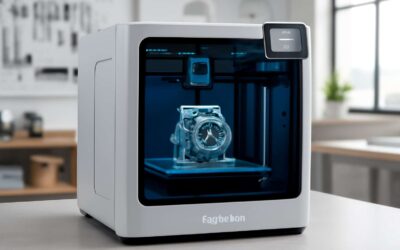
Printers and finishing techniques for 3d printing keychain projects emphasize reliability. A budget FDM machine with a 0.4 mm nozzle, proper bed adhesion, and post-processing like sanding and clear coating seals the deal.
Printer types and settings optimized for small parts
Materials matter for a 3d printing keychain. In SA, 68% of buyers favor customized, durable keepsakes; PETG’s durability outlasts daily wear, while PLA blends keep costs down and details sharp. Nylon adds abrasion resistance for heavy use but needs care. The right mix yields a lasting keepsake!
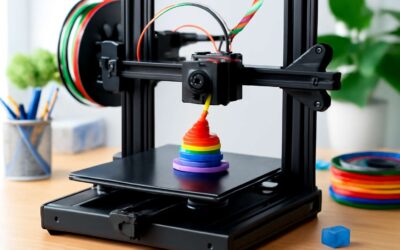
Printers and settings for small parts demand reliability. A budget FDM machine with a standard nozzle handles keychains well, especially with solid bed adhesion. The look benefits from fine layers for crisp edges, and cooling helps tame stringing on PLA. PETG demands thoughtful temperature control for a smooth finish.
- Desktop FDM with standard nozzle
- Fine-detail layering for crisp edges
- Cooling considerations after initial layers
- Bed adhesion strategies such as brim or raft
Finish matters for the 3d printing keychain. Light sanding, then a clear coat protects the surface. PETG and PLA respond to finishing; ABS can benefit from careful smoothing. Edges stay neat, designs pop.
Post-processing: sanding, smoothing, painting, and coating
In a market where memory outlives metal and plastic, 68% of South African buyers crave customized keepsakes. A well-crafted 3d printing keychain can tell that story, shimmering with personality as it hangs in the sun.
Materials lend character: PETG withstands daily wear, PLA blends keep costs friendly while preserving crisp details, and Nylon offers abrasion resistance for heavier use—though it asks for mindful care. The right mix yields a lasting keepsake.
Printers and settings for small parts demand reliability. A desktop FDM with a standard nozzle handles keychains well, especially with solid bed adhesion.
- Desktop FDM with standard nozzle
- Fine-detail layering
- Cooling considerations after initial layers
- Bed adhesion strategies such as brim or raft
Finish matters. I enjoy light sanding, then a clear coating that locks color and resilience. PETG and PLA respond to painting, while ABS benefits from smoothing before a final glaze — the design truly comes alive.
Coloring and personalization techniques
In a market where memory outlives metal and plastic—and 68% of South Africans crave customized keepsakes—the 3d printing keychain becomes a tiny ambassador of personality. PETG resists daily wear, PLA keeps costs low with crisp detail, and Nylon adds abrasion resistance—mind its care.
Desktop FDM with a standard nozzle suits keychains, delivering solid detail without drama. The trick is balancing fine-detail layering with sensible cooling after the initial layers, and acknowledging that edge stability influences finish as much as color does in the final product.
Finish matters. A light sanding and a clear coat lock in color and resilience. PETG and PLA take paint well; ABS benefits from smoothing before a final glaze. Coloring and personalization—two-tone finishes, decals, or resin fills—give each piece a distinctive personality.
Durability and wear considerations for everyday use
With memory outliving metal, 68% of South Africans crave customized keepsakes, and the 3d printing keychain stands as a tiny ambassador for personality. PETG resists daily wear; PLA keeps costs low with crisp detail; Nylon adds abrasion resistance—mind its care. Desktop FDM with a 0.4 mm nozzle suits these projects, delivering solid detail. The trick is balancing fine-detail layering with sensible cooling after the initial layers, and edge stability that influences finish as much as color.
- Nozzle: 0.4 mm
- Layer height: 0.1–0.2 mm for crisp edges
- Material choice affects wear and paint adhesion
Finish matters. A light sanding and a clear coat lock in color and resilience. PETG and PLA take paint well; ABS benefits from smoothing before a glaze. For everyday wear, a durable top coat and careful edge sealing extend service life. This approach suits the 3d printing keychain project.
Production workflow and marketing for 3d printing keychain designs
From idea to STL: prototyping and iteration
Light glints off a tiny emblem, and a story slips into view. “Every micro-detail holds a memory,” a seasoned designer once told me. From idea to STL, the production workflow for a 3d printing keychain becomes a quiet voyage—sketch to model, model to test, test to refinement. Prototyping and iteration turn imagination into tangible, pocket-sized charm.
From idea to STL, a typical cycle looks like this:
- Idea capture and sketching
- 3D modeling and STL export
- Prototype prints and evaluation
- Refinement and finalization
Marketing for these tiny treasures thrives on storytelling, limited editions, and local collaborations. Evocative visuals, moments of unboxing, and consistent branding help SA audiences connect with the design. In product pages, weave 3d printing keychain into natural copy so it reads as a story rather than a product tag, preserving warmth while pleasing search engines.
Version control, file sharing, and collaboration
Tiny charms ship faster when revision control and shared files keep the crew aligned. In the production workflow for a 3d printing keychain, version control, file sharing, and collaboration turn sketches into durable, pocketable stories. Each revision is tracked, comments are threaded, and prototypes can be tested with confidence! Tiny charms ship faster—structured version control and seamless file sharing cut iteration cycles by up to 40%.
Three practical touchpoints for teams:
- Version control: Git, GitHub, GitLab
- File sharing: Google Drive, Dropbox
- Collaboration: structured feedback and milestone reviews
For marketing these designs, storytelling, limited editions, and local collaborations create resonance in SA markets.
Pricing, packaging, and shipping for handmade keychains
“Speed is craftsmanship’s secret currency,” a reminder that a well-made 3d printing keychain travels as fast as its story can be told. In the production workflow, design intent meets practical packaging, while marketing leans on local narratives in South Africa. Handmade keychains become pocket-sized ambassadors when pricing, packaging, and shipping are aligned with the pace of customer expectations.
- Pricing factors for 3d printing keychain projects: materials, finishes, and customization
- Packaging: eco-friendly boxes, labels, and protective inserts
- Shipping: reliable couriers, tracking, SA import considerations
- Marketing: storytelling, limited editions, and local collaborations in SA markets
By weaving pricing, packaging, and shipping into the design phase, creators foster trust and repeat business, turning each tiny keychain into a tangible South African story.
SEO, content strategy, and listing optimization for keychain products
Production workflow for a 3d printing keychain reads like a quiet novel—idea, iteration, and a patient finish that honors craft. Each piece travels from CAD dreams to a tangible charm, where speed and care tango in equal measure. In that cycle, the product becomes a tiny emblem of possibility, a testament to craft in South Africa’s markets.
Marketing and content strategy breathe through listings, SEO, and storytelling tailored to SA shoppers! The product gains life in descriptions that evoke place and provenance, crisp photography, and localized language. By weaving local narratives into pages, brands turn materials and mechanisms into affordable aspirations.
- Compelling titles that blend keywords with character
- Story-driven descriptions that connect origin and impact
- Images that reveal detail, scale, and finish
- Localized metadata and alt text for SA searchers

0 Comments